Shaping Indigenous economics for people, planet, and resilient futures.
Working to improve wellbeing and opportunity for communities facing exclusion and inequality.
Across Africa, Indigenous Knowledge Systems remain structurally disconnected from national economic, health, environmental, and innovation architectures. Prevailing development and market models continue to extract value from Indigenous contexts without reinvesting in the knowledge, ecosystems, and social systems that sustain long-term productivity, livelihoods, and employment.
This disconnection creates a compounding systems failure. Indigenous intellectual capital is degraded, markets remain underdeveloped, and capital is deployed into fragile value chains with elevated long-term risk.
These risks extend beyond Indigenous communities. They constrain Africa’s ability to build resilient health systems, climate-resilient economies, and inclusive growth pathways, while increasing social, environmental, and governance risk for businesses, investors, and institutions operating across the continent.
Reframing Indigenous Knowledge Systems as strategic infrastructure is no longer a cultural question. It is an economic, governance, and risk-management imperative.
When governed, evidence-informed, and integrated into modern economic architectures, Indigenous Knowledge Systems can function as drivers of wellbeing economies — strengthening health systems, regenerating natural capital, and supporting equitable, long-term resilience.
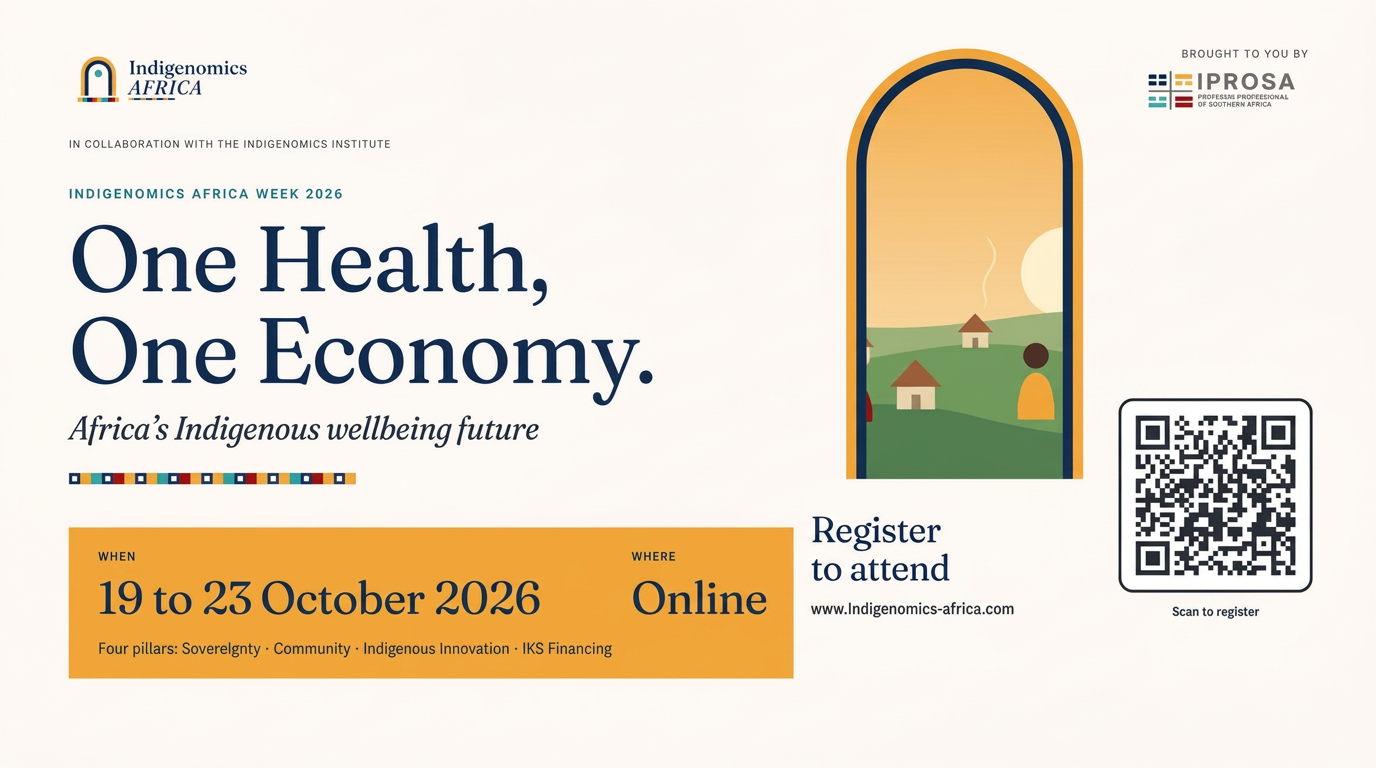
The 2026 focus positions health and wellbeing as signals of system integrity across governance, finance, innovation, and community structures.
Shaping alignment between knowledge, institutions, and markets for Africa’s wellbeing economies.
We use cookies to analyze website traffic and optimize your website experience. By accepting our use of cookies, your data will be aggregated with all other user data.